Money Tips
How to Save Money on Your Energy Bills This Winter
Winter bills have a way of arriving with a thud. The heating goes on, the lights go on earlier, and the same house that felt perfectly cheap to run in June suddenly seems to be eating money. It is easy to feel that there is nothing you can do about it, especially when the headlines are full of wholesale prices you cannot influence.
The useful news is that most of what drives a winter bill sits in three places: what you pay per unit of energy, when you use it, and how much of the heat you have paid for actually stays in the house. Work through those three in order and you will usually find more than you expect — and almost none of it requires a builder, a new boiler or a four-figure sum.
Start with the tariff, not the thermostat
Before you touch a single radiator valve, spend half an hour understanding what you are being charged. Every tariff has two parts: the unit rate, which is what you pay for each kilowatt hour you use, and the standing charge, which you pay daily whether you use anything or not. A tariff with a very cheap unit rate and a high standing charge can be a poor deal for a small household, and a good one for a family in a draughty four-bedroom house.
The price cap is worth understanding properly, because it is widely misunderstood. It limits the unit rate and standing charge a supplier can charge on a default tariff — it does not cap your total bill. Use more, pay more.
To compare sensibly, have this to hand:
- Your annual usage in kilowatt hours for gas and electricity — your bill or online account will show an estimate, and a smart meter app will show the real figure.
- Your current unit rates and standing charges, both fuels.
- Any exit fees on your current deal, and how long is left on it.
- Whether you are on a time-of-use tariff, such as Economy 7 or a smart off-peak plan, and whether your habits actually match it.
Use an Ofgem-accredited comparison service or the Citizens Advice comparison tool rather than a random search result. And check the small things: direct debit and paperless billing discounts, and whether you have drifted onto a supplier's expensive default tariff after an old fixed deal ended.
Timing beats temperature
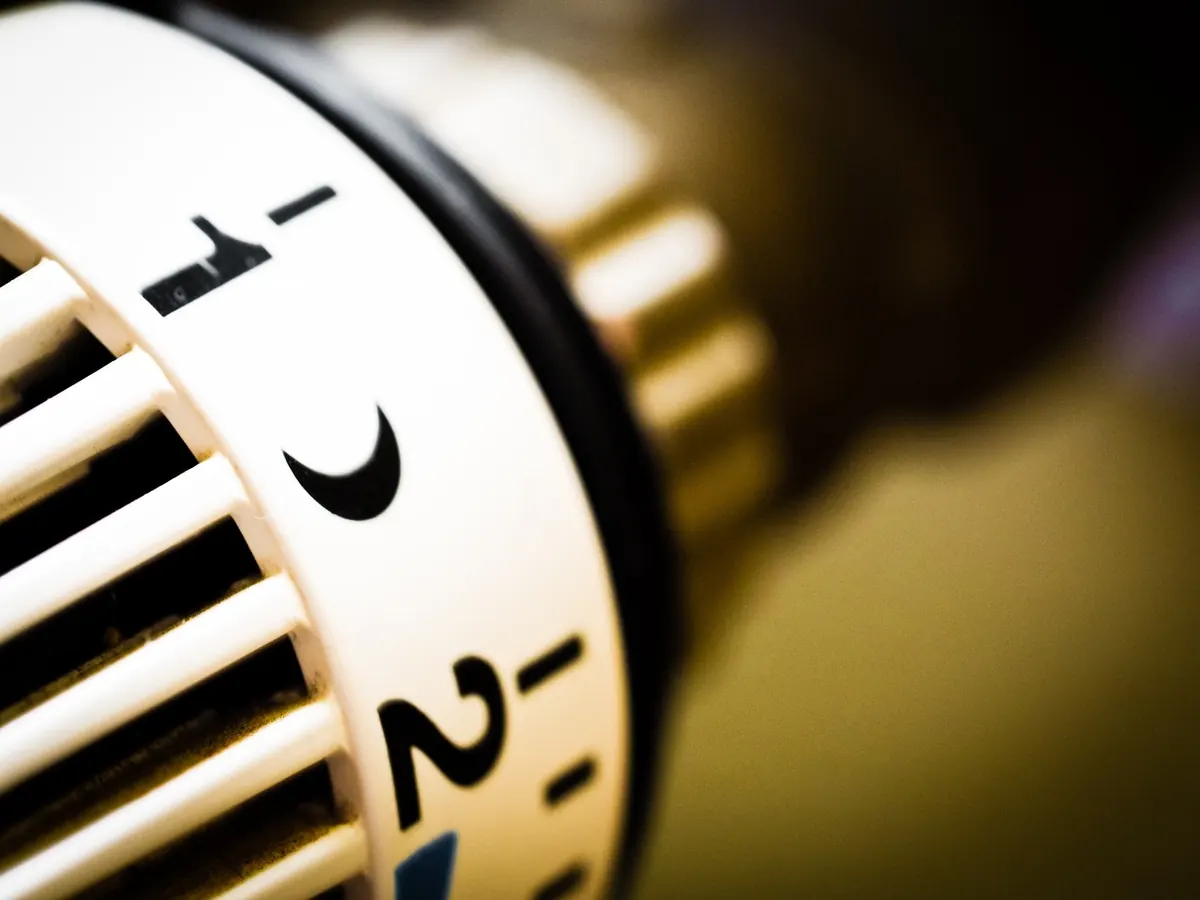
Most households heat an entire house for the benefit of one room. Set a schedule rather than relying on a dial you nudge up and down all evening. A setback overnight and while you are out, with the heating coming on half an hour before you get up, is usually cheaper than letting the house cool completely and then blasting it back to warm.
Keep rooms at a comfortable temperature rather than chasing short bursts of heat. Living areas are commonly recommended at around 18–21°C, with bedrooms cooler; turning the thermostat down by a degree or two and wearing a jumper is one of the simplest savings available. If anyone in the household is very young, elderly or unwell, do not let cost-cutting push rooms below a safe temperature — that is a false economy.
Two other changes make a real difference. First, stop blocking your radiators: sofas, drying laundry and long curtains all absorb heat you have already paid for. Second, if you have a modern condensing boiler, ask your installer or check the manual about lowering the flow temperature. Condensing boilers run more efficiently at lower flow temperatures, and radiators will simply take a little longer to warm up.
Keep the heat you have paid for
Insulation is the least glamorous and most reliable saving there is. Check the loft first — if the insulation is thin, patchy or compressed, topping it up is one of the best-value jobs in the house. A hot water cylinder jacket and lagging on exposed pipes are cheap and quick. Cavity wall and solid wall insulation are bigger jobs, but worth investigating.
Then hunt draughts. Letterboxes, keyholes, gaps under doors, unused chimneys and ill-fitting floorboards add up. Draught excluders, brush strips and a chimney balloon cost very little and take minutes to fit. Do keep some ventilation, though: never block the air supply to a gas appliance, and keep bathrooms and kitchens able to clear steam, or you will trade a heating bill for a damp problem.
Check what help you are entitled to before paying for anything. Energy suppliers run obligation schemes that fund insulation and heating improvements, and many councils run their own grants. The Warm Home Discount is applied automatically for many eligible households, but not all — it is worth checking. Free, independent guidance is available from Citizens Advice and the Energy Saving Trust.
Hot water and appliances quietly drain the budget
Heating water accounts for a large slice of a typical gas bill. Shorter showers, a shower head that aerates the flow, and only boiling the water you need all help. Set your cylinder thermostat to around 60°C — lower risks bacteria, higher simply wastes gas. Wash clothes at 30°C, run full loads, use eco settings on the dishwasher and washing machine, and dry washing on a rack or line rather than in a tumble dryer when you can. Small standby loads are individually trivial, but a house full of them is not.
Read your meter and audit the bill
Estimated bills flatter nobody. Submit a reading every month, or use your smart meter's in-home display, so you are paying for what you actually used. If your account is sitting on a large credit balance, ask your supplier to refund it or reduce your direct debit. If you are in deficit, deal with it now rather than in April, when the shortfall will be larger and the weather no kinder.
If you are struggling, speak up early
Contact your supplier as soon as you think you may miss a payment. They are required to work with you on an affordable repayment plan, and there are protections in place for vulnerable customers. Ask about the Priority Services Register if anyone in the home is disabled, chronically ill or depends on powered medical equipment. Free, independent debt advice is available from Citizens Advice, StepChange and National Debtline — you should never pay for it. For advice on your specific circumstances, speak to one of those services or a qualified adviser.
A weekend plan that pays for itself
Pick one afternoon and work through this in order:
- Take a meter reading and photograph it.
- Check your unit rates, standing charge and contract end date.
- Set a heating schedule with an overnight setback.
- Walk the house with a torch, looking for gaps and blocked radiators.
- Check your loft depth and whether the cylinder and pipes are lagged.
- Ring your supplier about any discount or grant you might be missing.
None of it is dramatic. Together, though, it changes the shape of a winter bill — and it means the money you do spend on heating goes into warming the rooms you are actually sitting in.
Photo: TBIT / Pixabay